DRAGEN–GATK
GATK and DRAGEN: differences discussed in the training
- GATK single sample pipeline: the goal is to do the best possible single sample calling on a human genome
- DRAGEN: similar to GATK best practice but what’s new →
- Train the PCR model
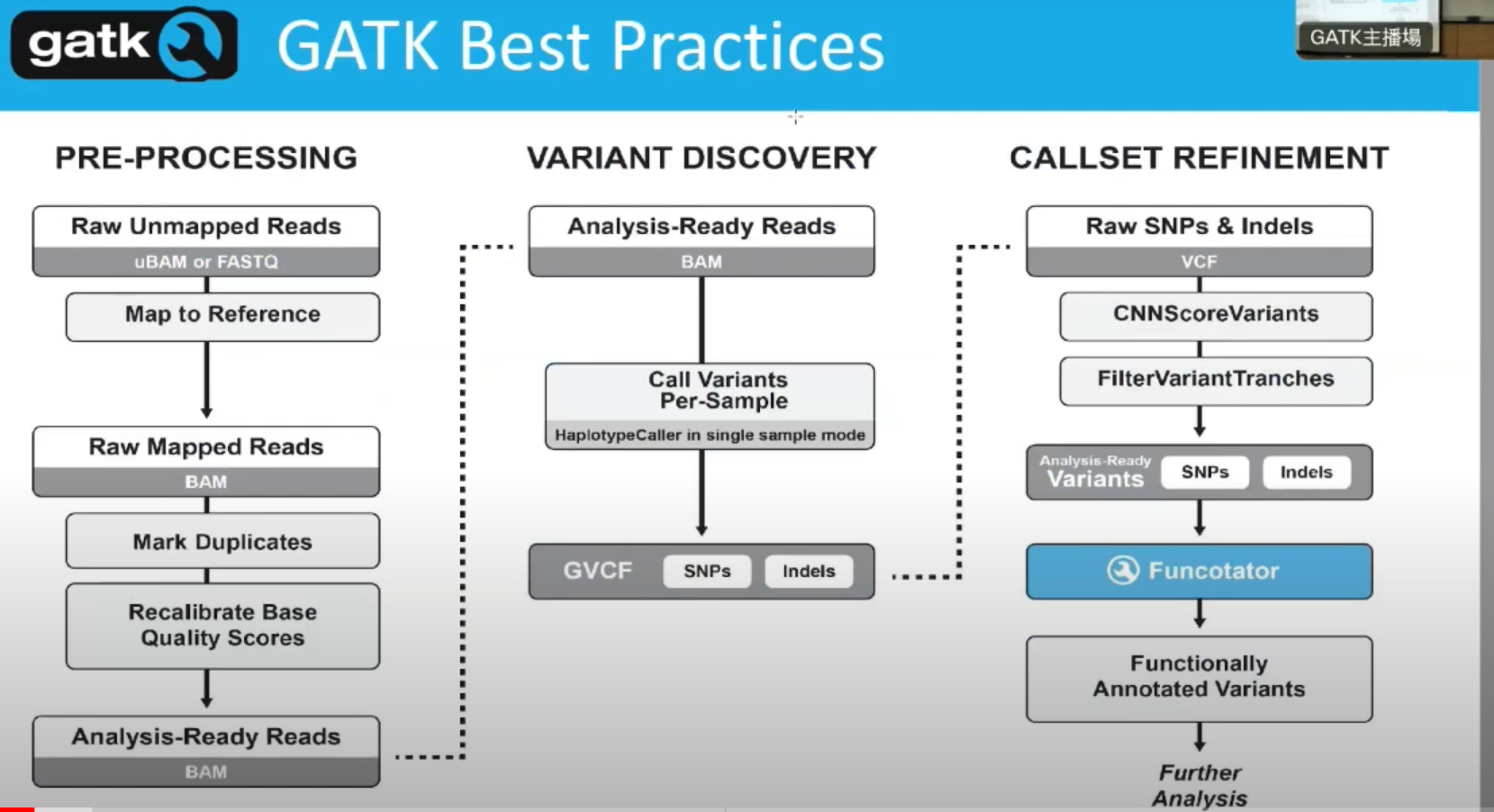
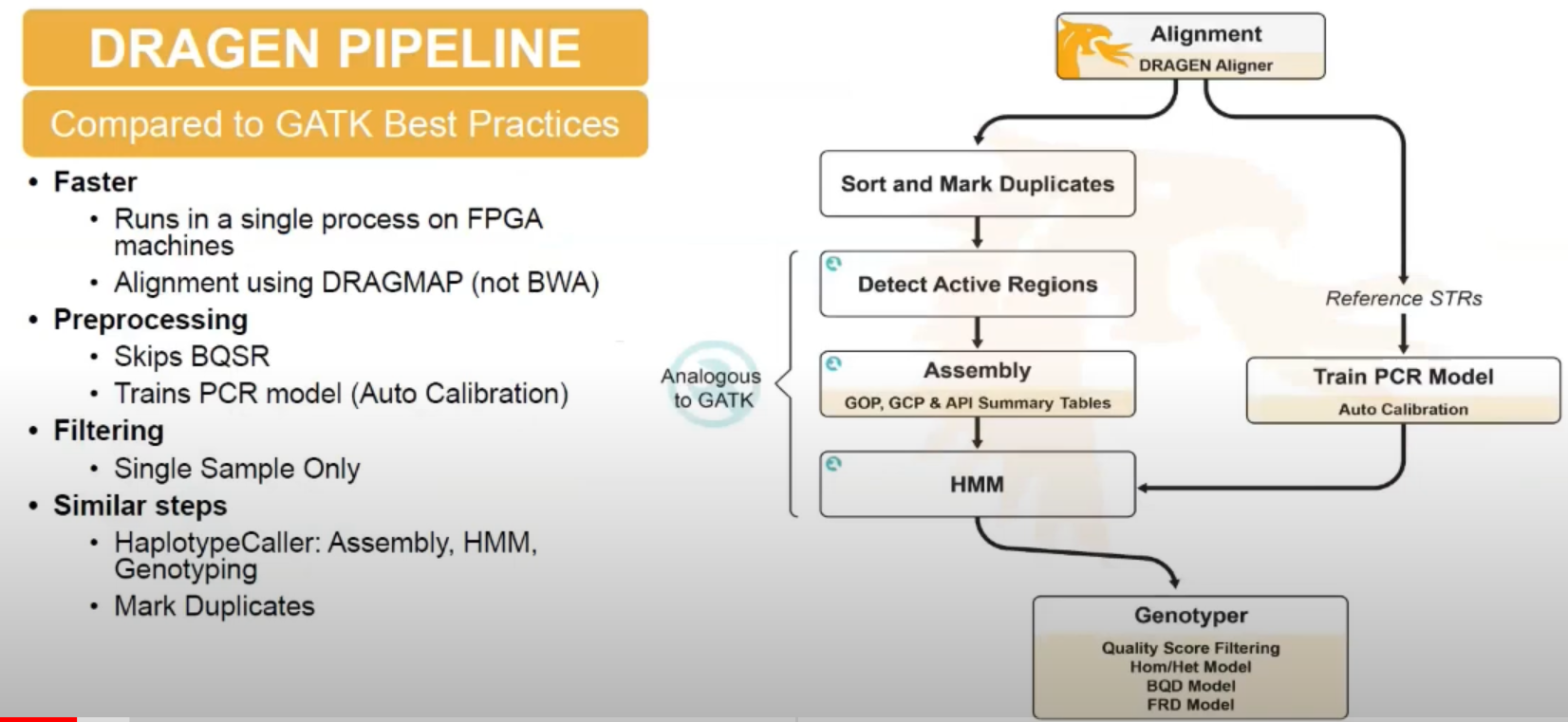
GATK vs. DRAGEN-GATK
-
Aligner → DRAGMAP
-
No BQSR step → the training describes a different error-modeling strategy
-
Variant discovery adds an STR error-modeling step while retaining HaplotypeCaller, with three improvements shown below:
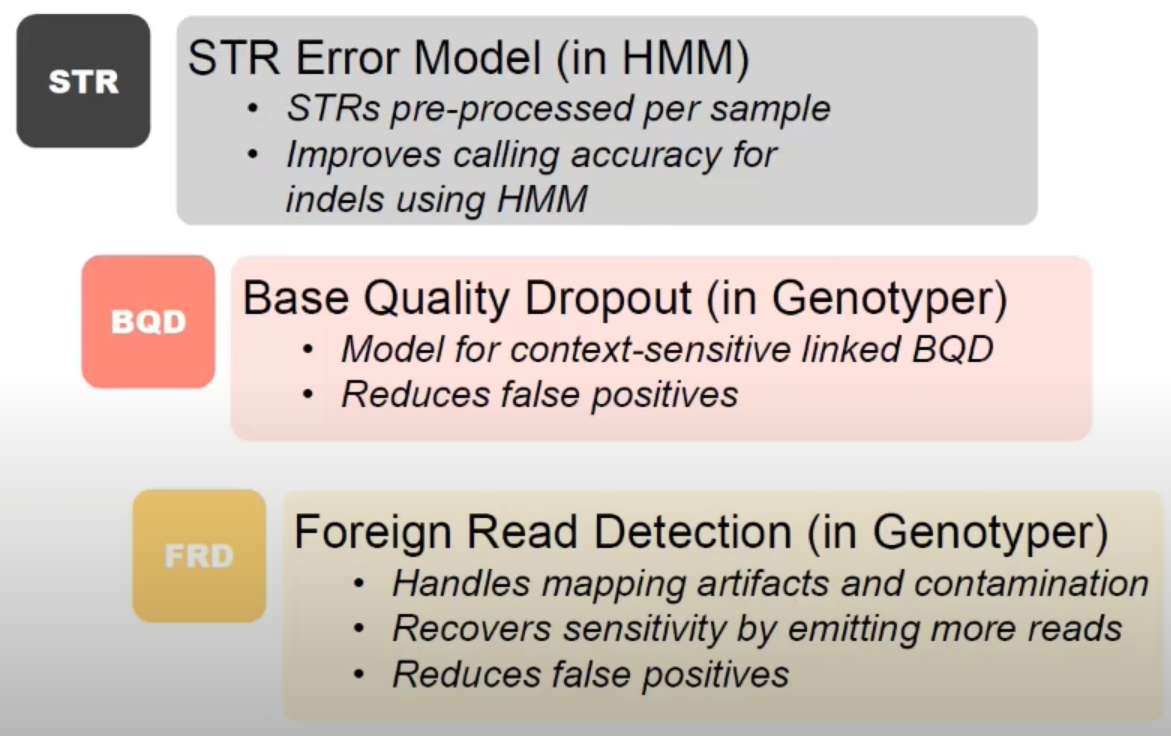
Variant discovery adds an STR error-modeling step while retaining HaplotypeCaller, with three improvements shown below:
STR (short tandem repeats) errors occur in both aligning and sequencing
- Hard to align
- PCR often adds/deletes STR units
- Sequencers struggle to sequence bases around STR units in the genome
STR model (CallibrateDragstrModel)
- Find all of these STR in your reference genome
- Assumption: We don’t know if this error is an PCR error or an indel. But let’s assume that most of it are PCR errors.
- Try to calculate the baseline error rate as a prior → If this region has high baseline error rate, we will be less confident for certain variant call in this region. → We get much better indels (60% → 90% accuracy).
BQD (Base quality dropout) + FRD (Foreign read detection)
- It characterize the likelihood of getting a wrong call
- For example if we get A/C, it gives us a model to say how likelihood A or C are actually errors (how likelihood we should get C/C or A/A) An A/C genotype may initially appear most likely; treating low-confidence alternative reads as errors can instead make A/A more plausible.
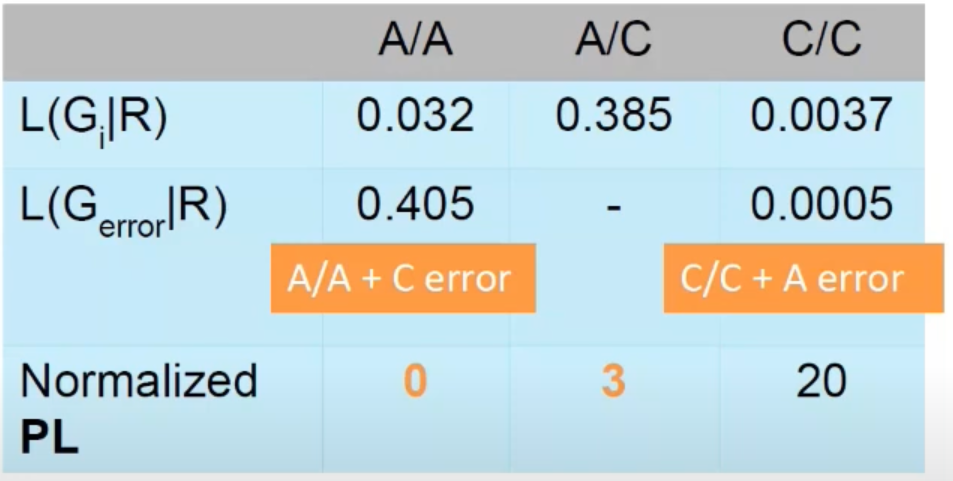
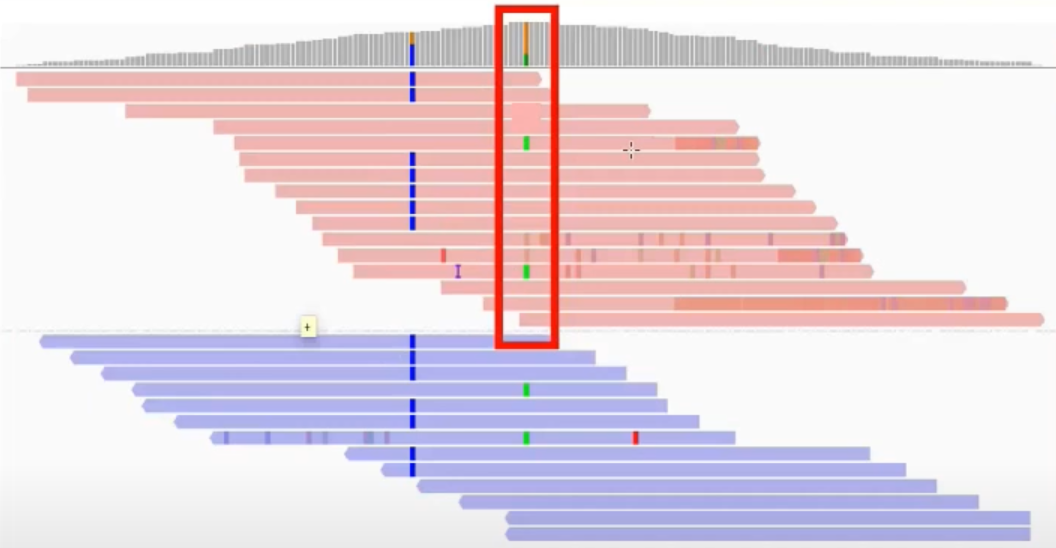
BQD
-
Assumption: Errors are often non-independent →
- Sequencing quality fails at the end of the read
- Certain reference regions cause base quality errors
- Penalizes alleles with lower quality reads
-
For the variant highlighted in green, inspect the quality of the supporting reads rather than treating each apparent call independently. The read-level evidence changes confidence in the variant.
BQD
FRD
-
catch the call from the reads that don’t belong → might be contamination or something
-
In the example with a 20:4 imbalance, the less frequent GG-supporting reads may have poor quality. They may be foreign reads rather than evidence for a true genotype.
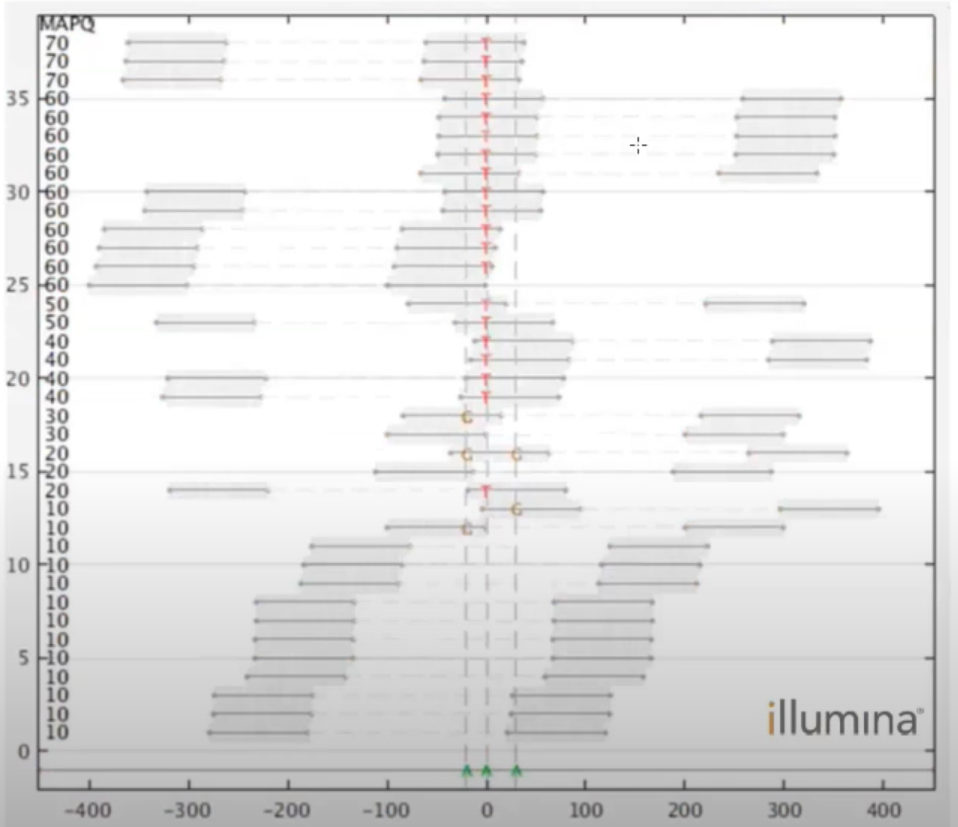
In the example with a 20:4 imbalance, the less frequent GG-supporting reads may have poor quality. They may be foreign reads rather than evidence for a true genotype.
Long-read sequencing
- PacBio vs. ONT
- Long reads can span structural variants that exceed the length covered by individual short reads.
- Some non-unique repetitive regions are difficult to resolve with short reads.
- Long-read workflows can also provide DNA-methylation information. Short-read methylation workflows typically require additional library preparation, which introduces its own effects on the data.