Project Overview
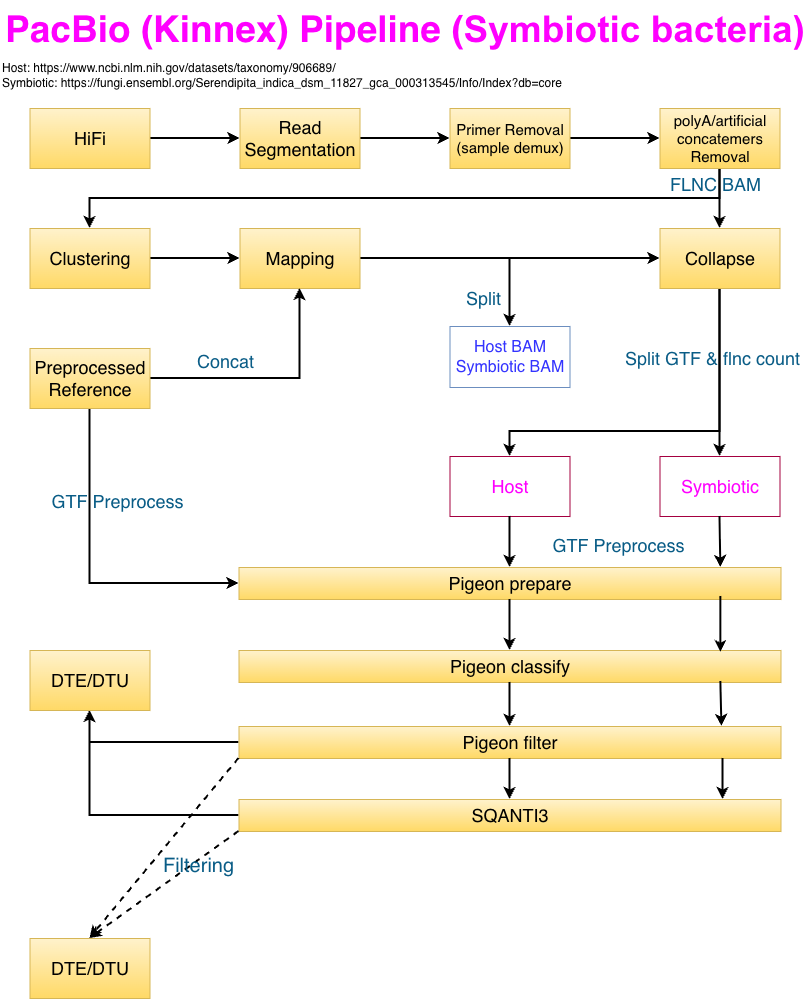
I developed a customized PacBio Kinnex / Iso-Seq analysis pipeline for samples containing transcripts from both the host organism and its symbiotic microorganism. Since the sequencing data represented a mixed biological system, the workflow required customized reference preparation, combined host–symbiont mapping, and downstream separation of species-specific isoforms.
Goals / Challenges
- Analyze mixed host–symbiont transcriptomes from PacBio Kinnex data
The sequencing samples contained transcripts from both the host organism and its symbiotic microorganism, requiring a workflow that could distinguish and analyze both sources. - Build a customized combined reference
Host and symbiont genome references had to be preprocessed, standardized, and concatenated into a combined reference for simultaneous read mapping. - Handle heterogeneous annotation formats
The host and symbiont GTF files came from different databases and used different annotation structures. Additional preprocessing was required to make the annotations compatible with PacBio downstream tools. - Perform long-read Iso-Seq processing from raw HiFi reads
The pipeline needed to process PacBio Kinnex data through read segmentation, primer removal, polyA / artificial concatemer removal, clustering, mapping, and isoform collapsing. - Separate host and symbiont isoforms after mapping and collapsing
Since reads were mapped to a combined reference, downstream collapsed GTF files, BAM files, and FLNC count tables had to be split back into host-specific and symbiont-specific outputs. - Classify and filter high-quality isoforms
The workflow integrated Pigeon and SQANTI3 to classify transcript structures, identify known and novel isoforms, evaluate splice junction quality, detect potential artifacts, and retain high-confidence isoforms. - Prepare reliable input for DTE and DTU analysis
The final isoform count matrices and filtered transcript annotations were prepared for differential transcript expression and differential transcript usage analysis. - Adapt a standard PacBio pipeline to a non-standard biological system
The project required modifying the usual single-species PacBio Iso-Seq workflow into a dual-reference, host–symbiont-aware pipeline.
Results
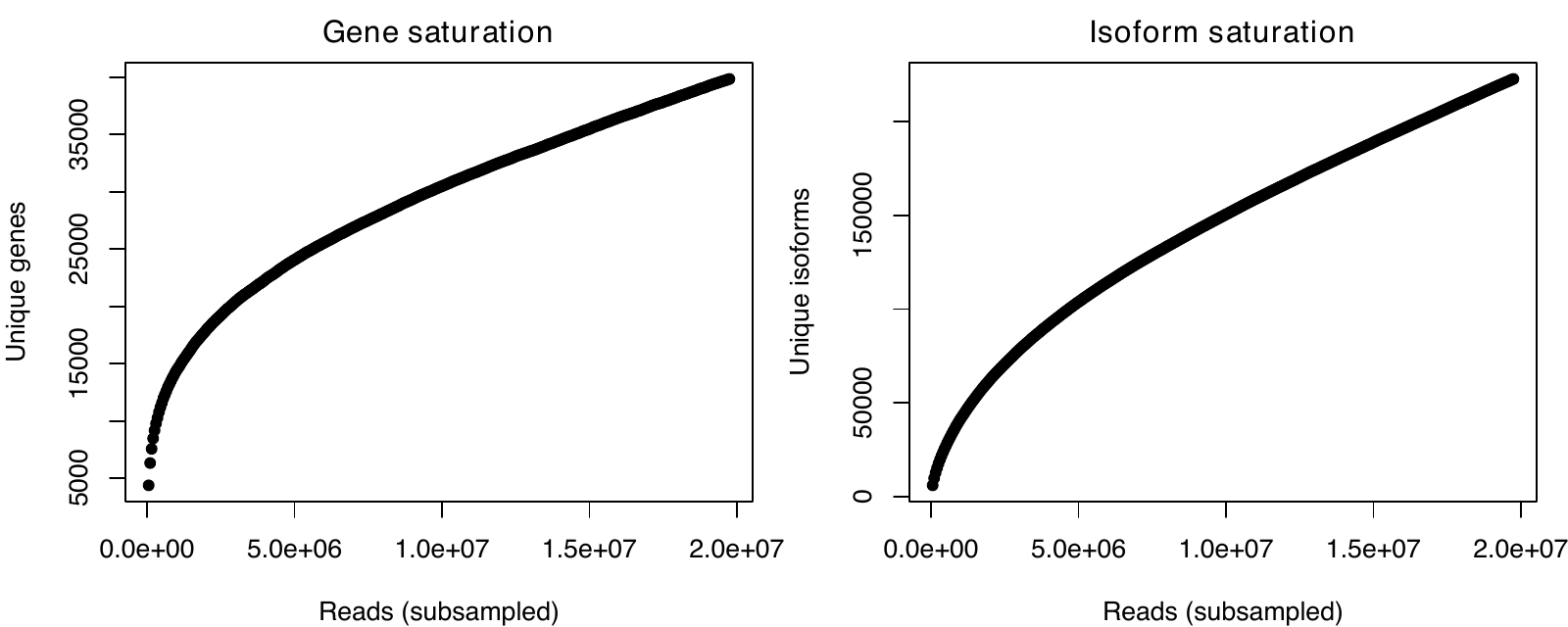
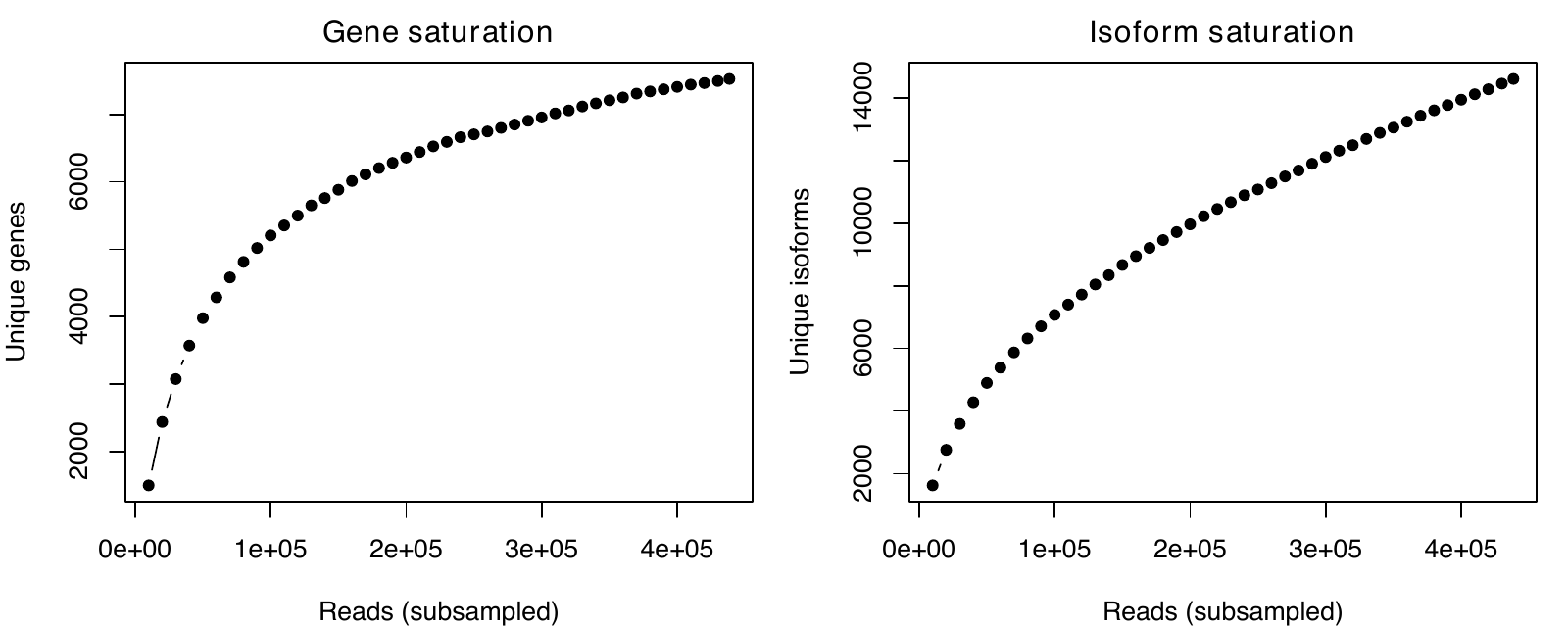
Saturation
Dendrobium_catenatum
Serendipita_indica
Filtering
structural_trusted
Isoforms must meet all of the following criteria:
- FSM or ISM or NNC or NIC
- all_canonical == “canonical”
- RTS_stage == FALSE
- perc_A_downstream_TTS < 60
- FL >= 2 in at least two samples, with total FL >= 20
structural_trusted/potential_protein_coding
Potential protein-coding isoforms must also meet these criteria:
- coding == “coding”
- predicted_NMD == FALSE
- ORF_seq is not empty
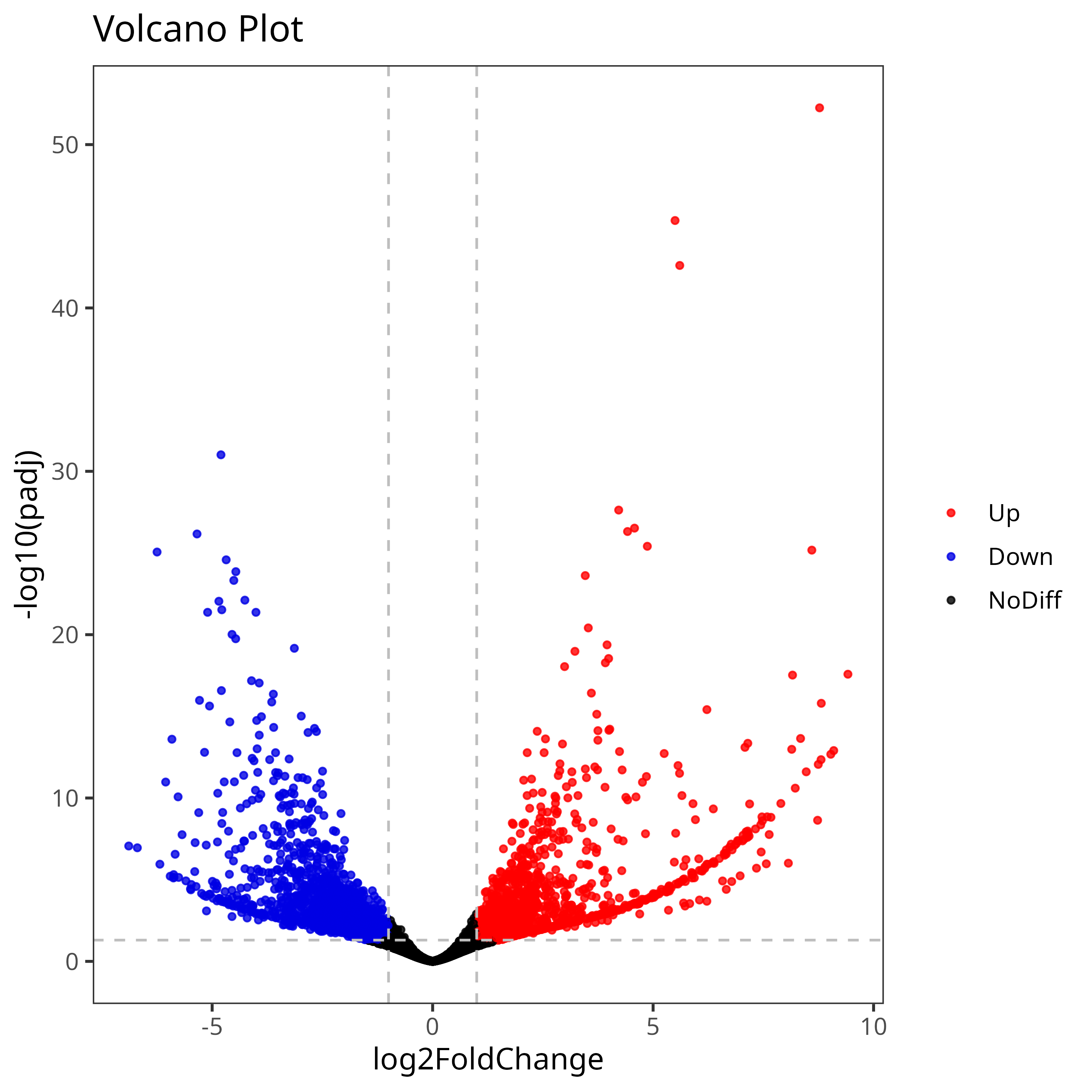
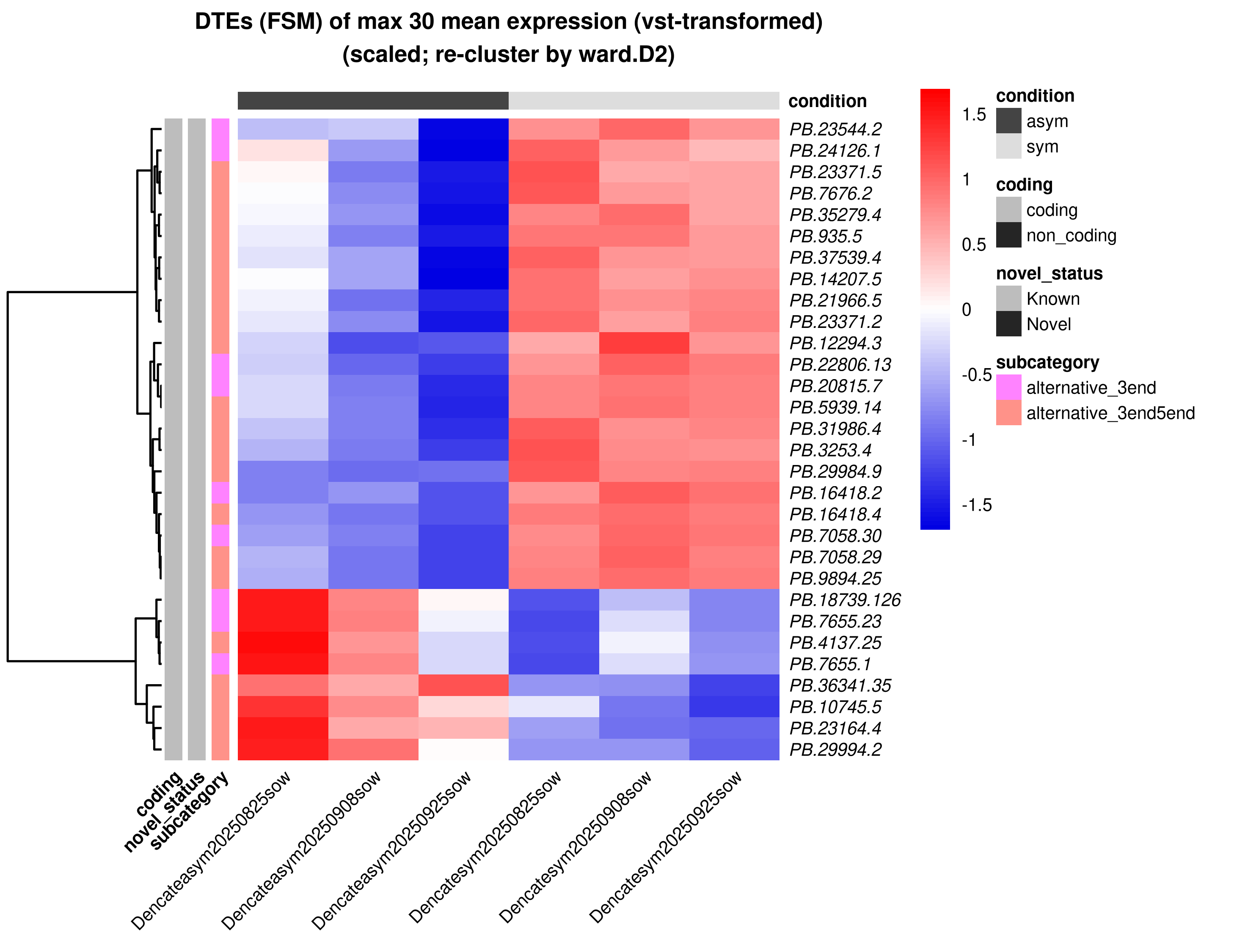
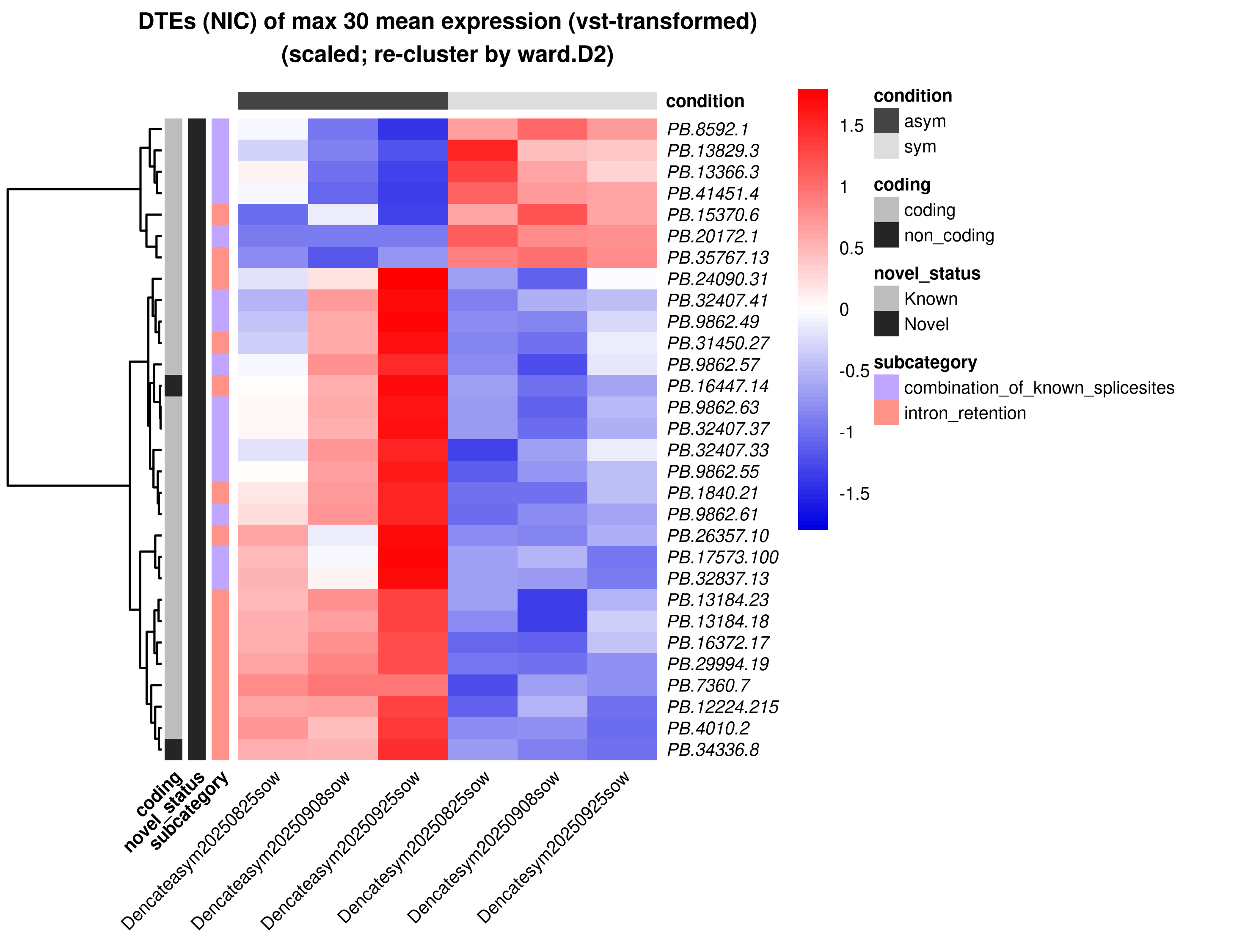
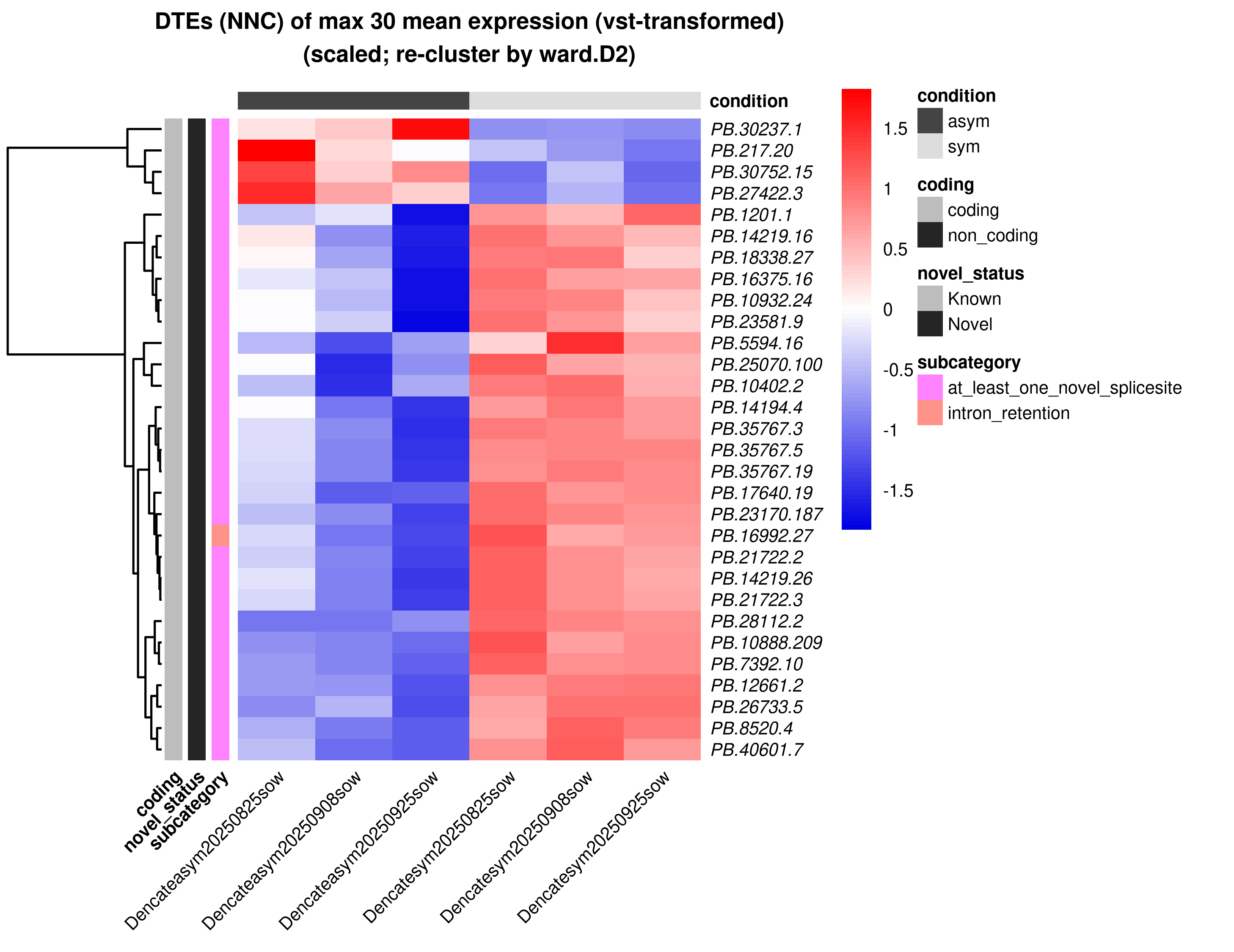
DTE
Continue downstream analysis with FSM, NIC, and NNC isoforms from structural_trusted.
dual species visualization
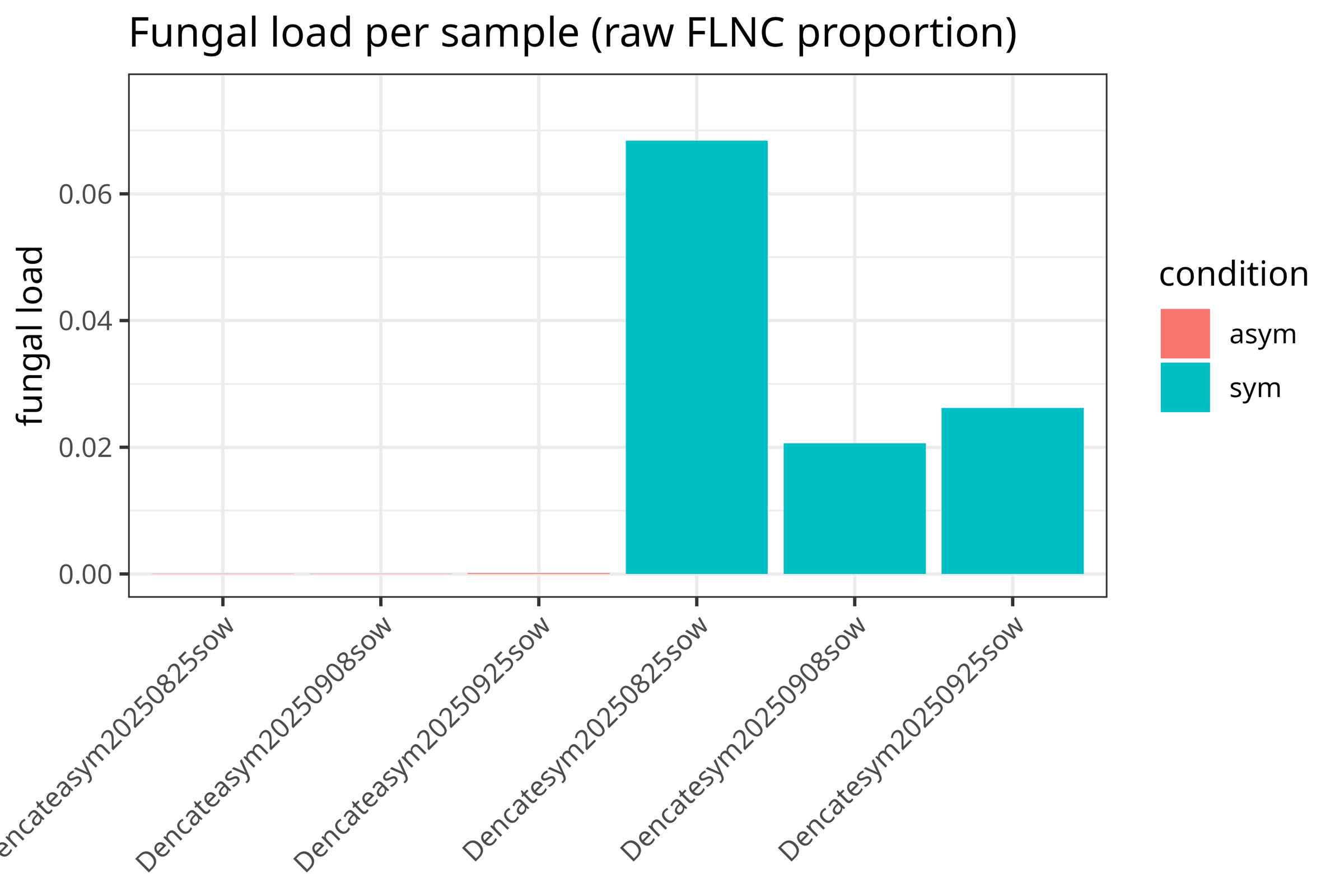
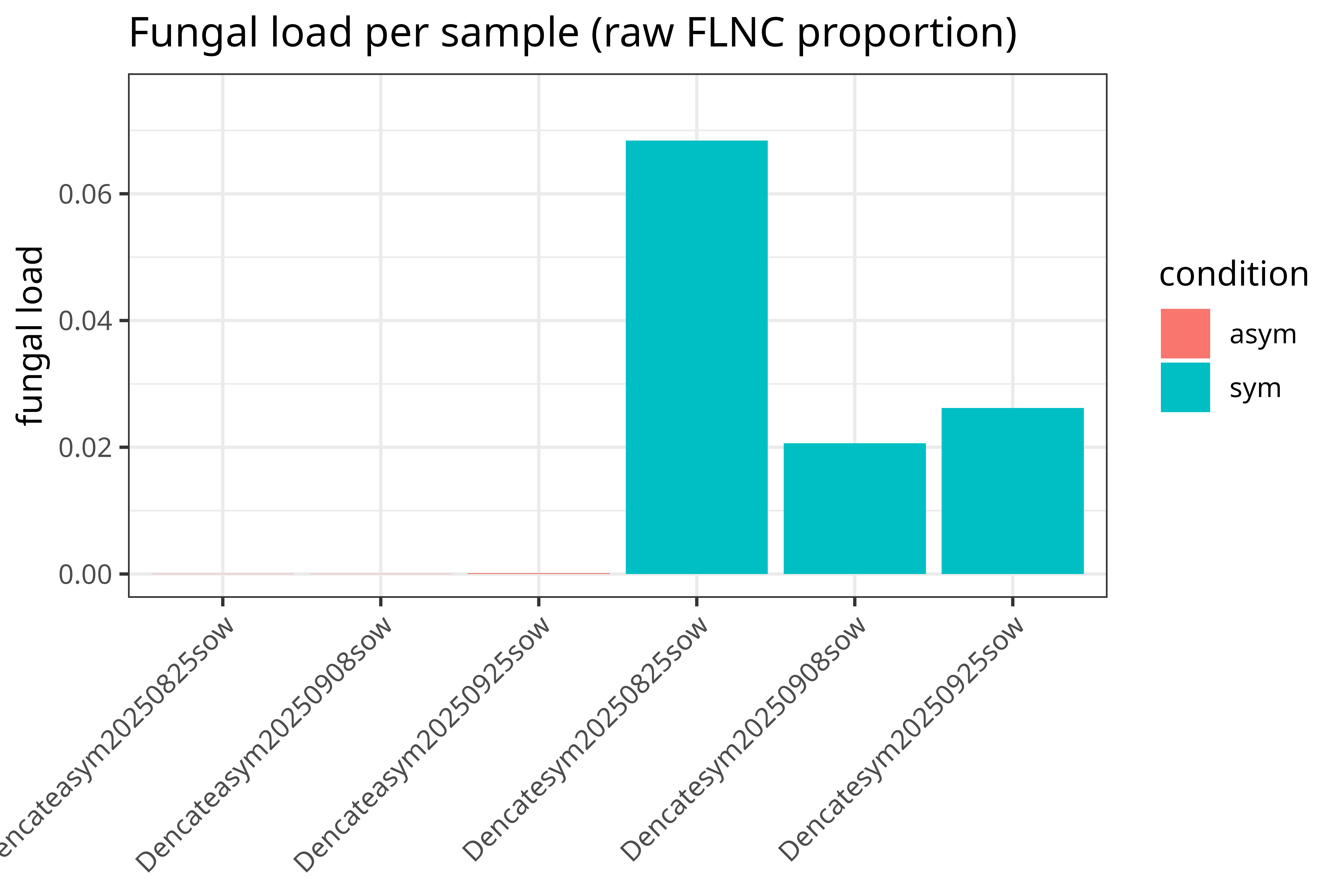
Download original image: Fungal load across samples
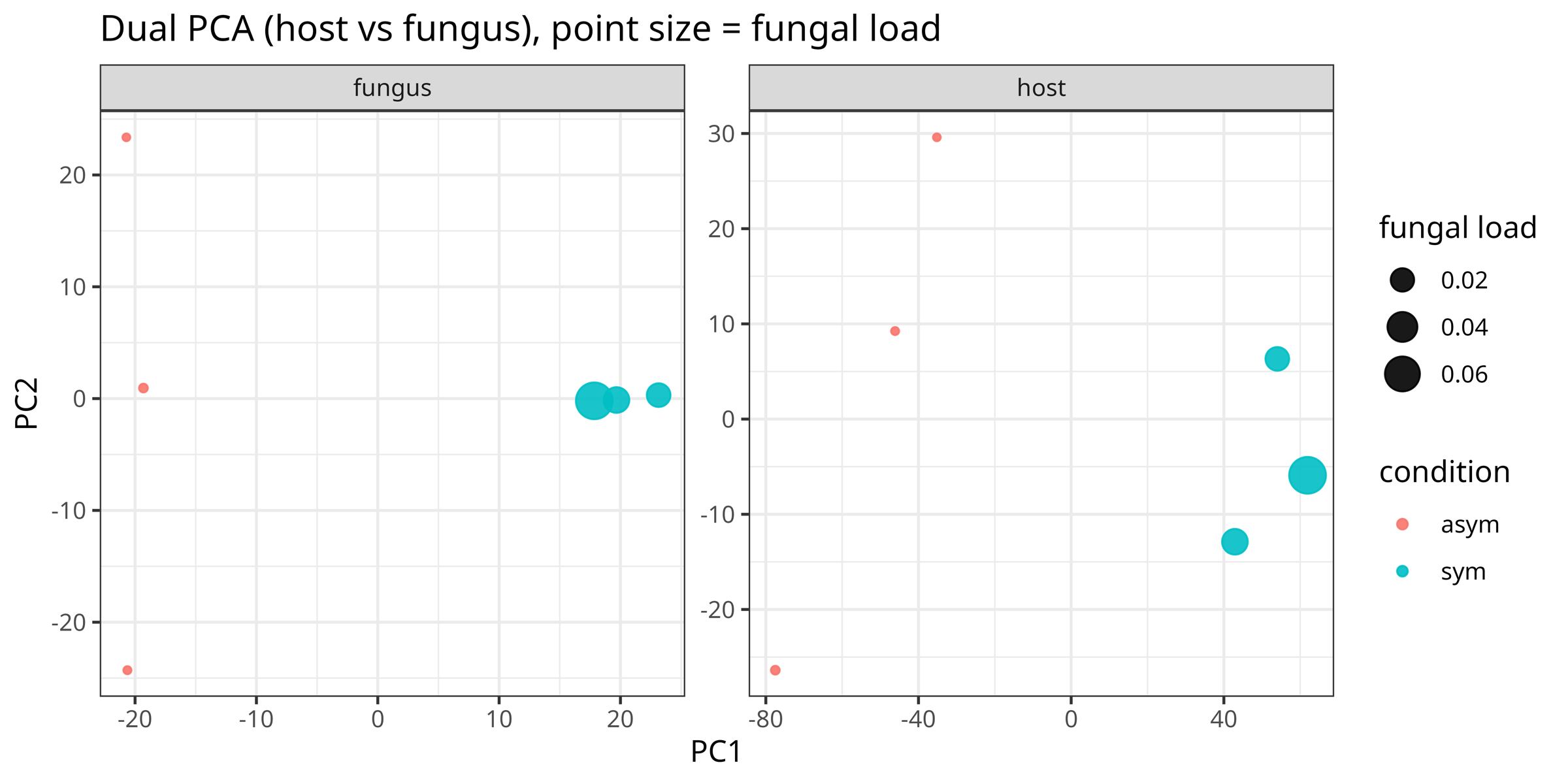
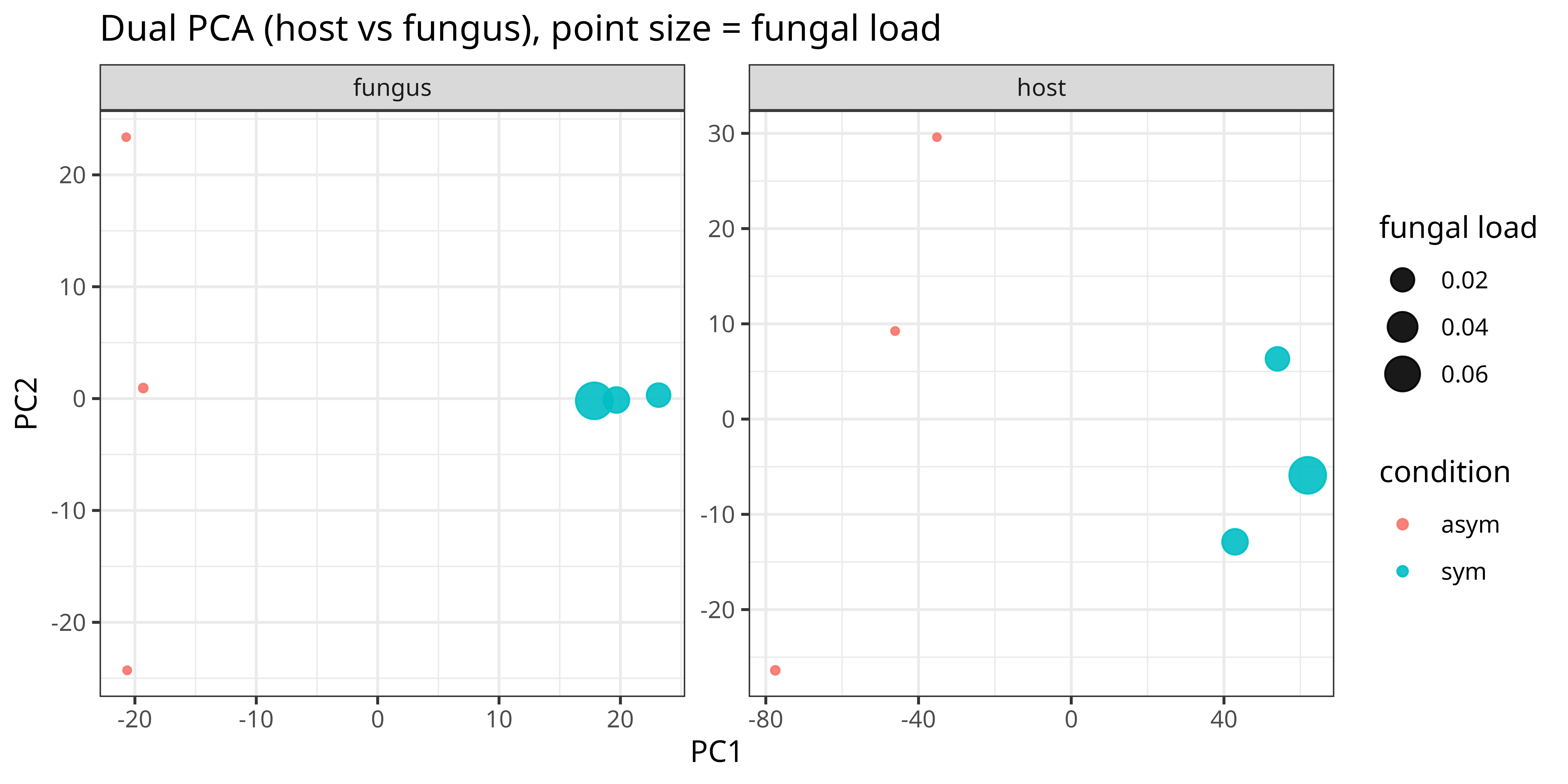
Download original image: Dual-species principal component analysis
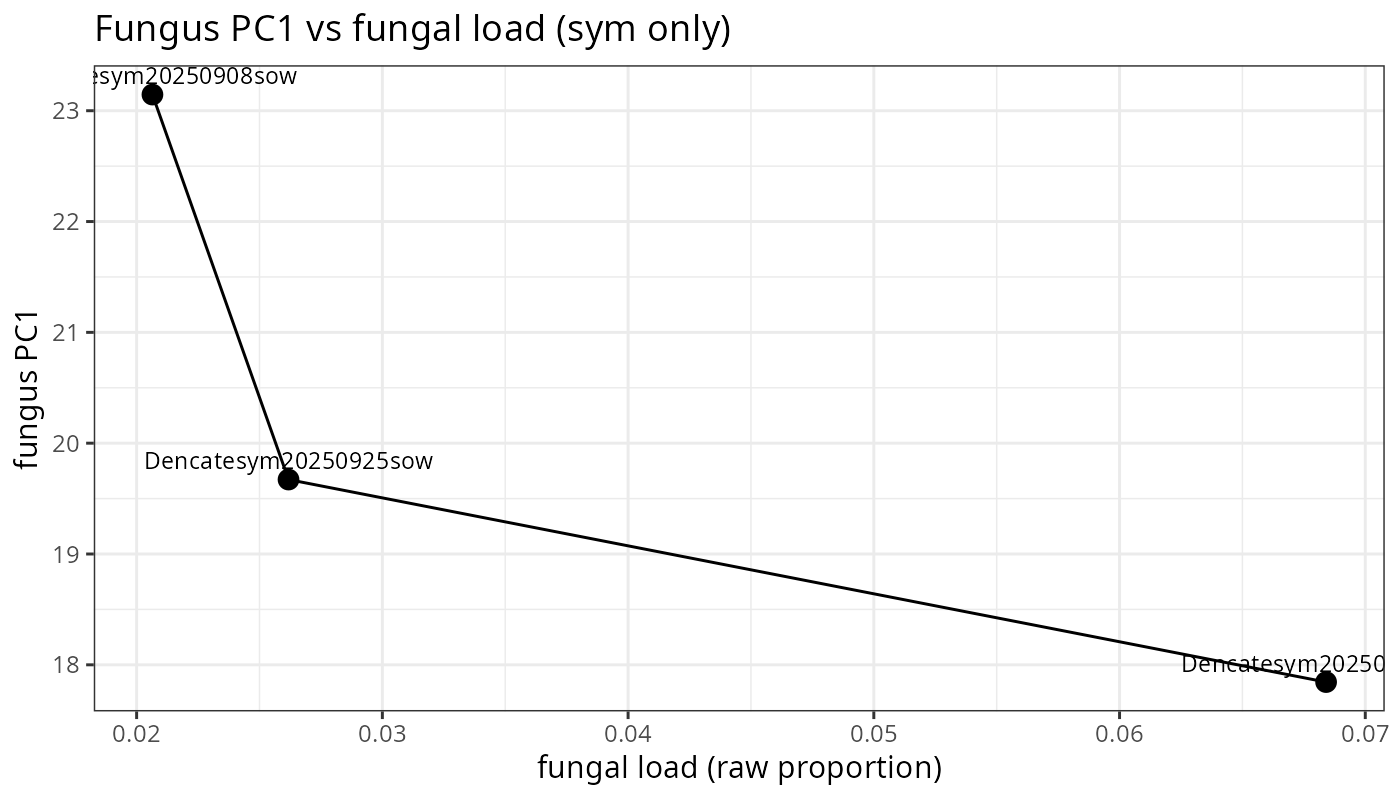
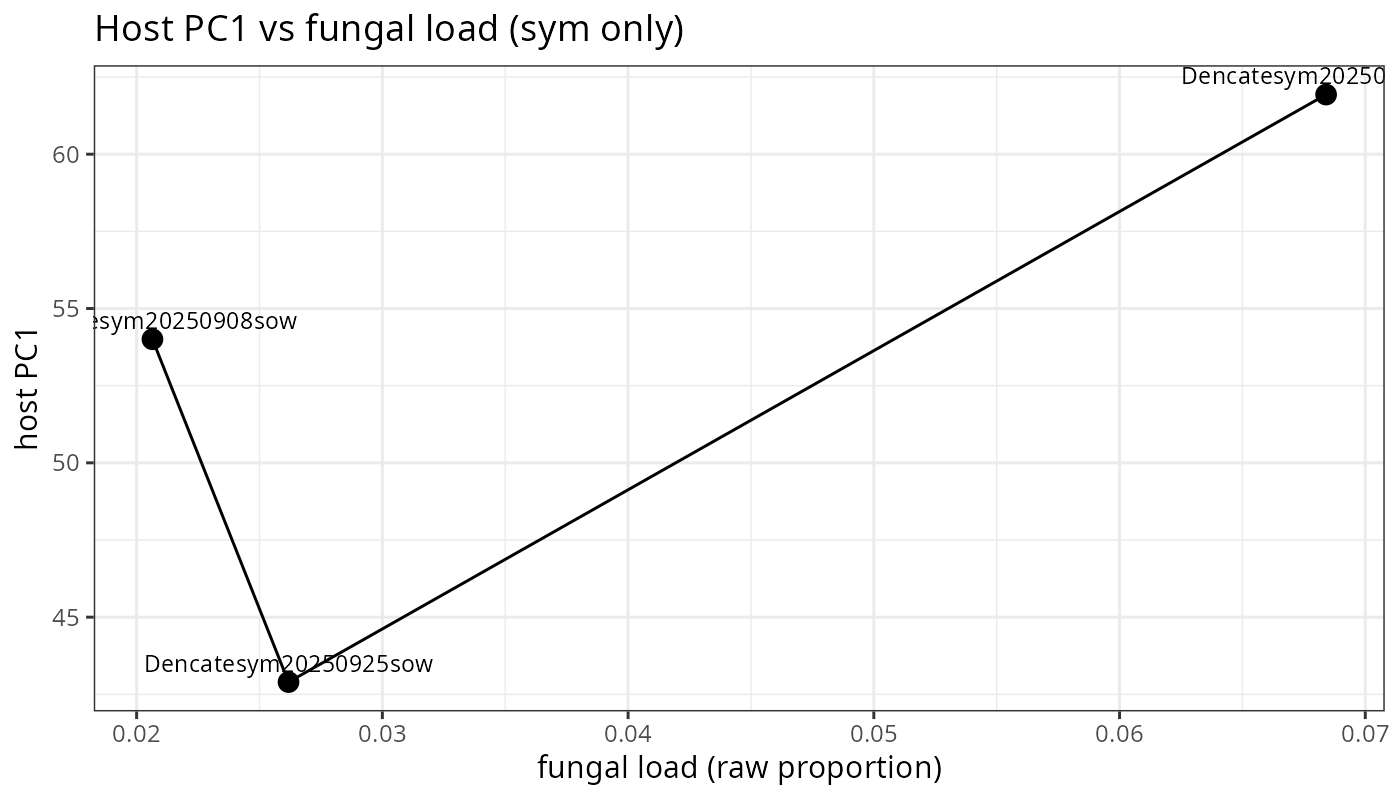
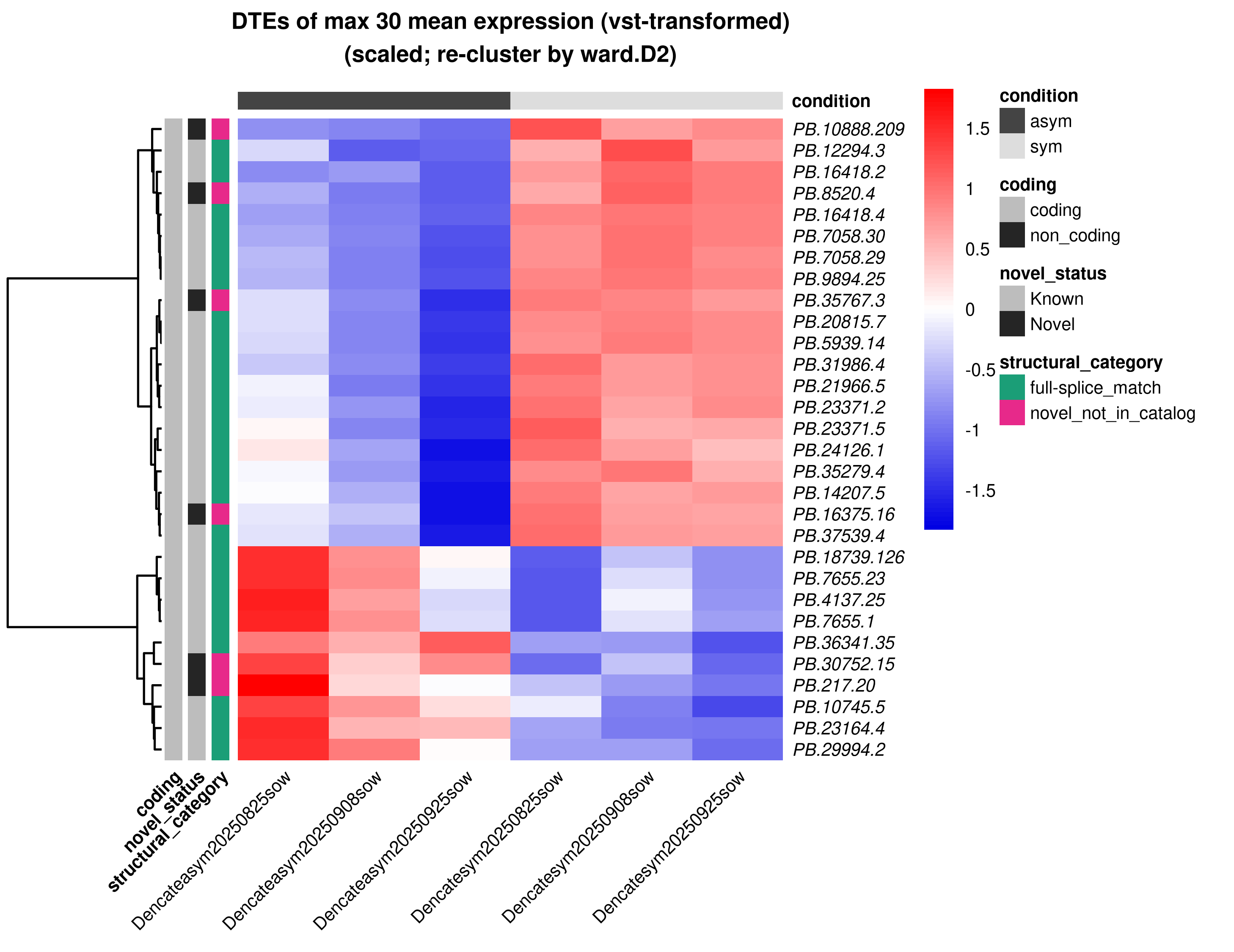
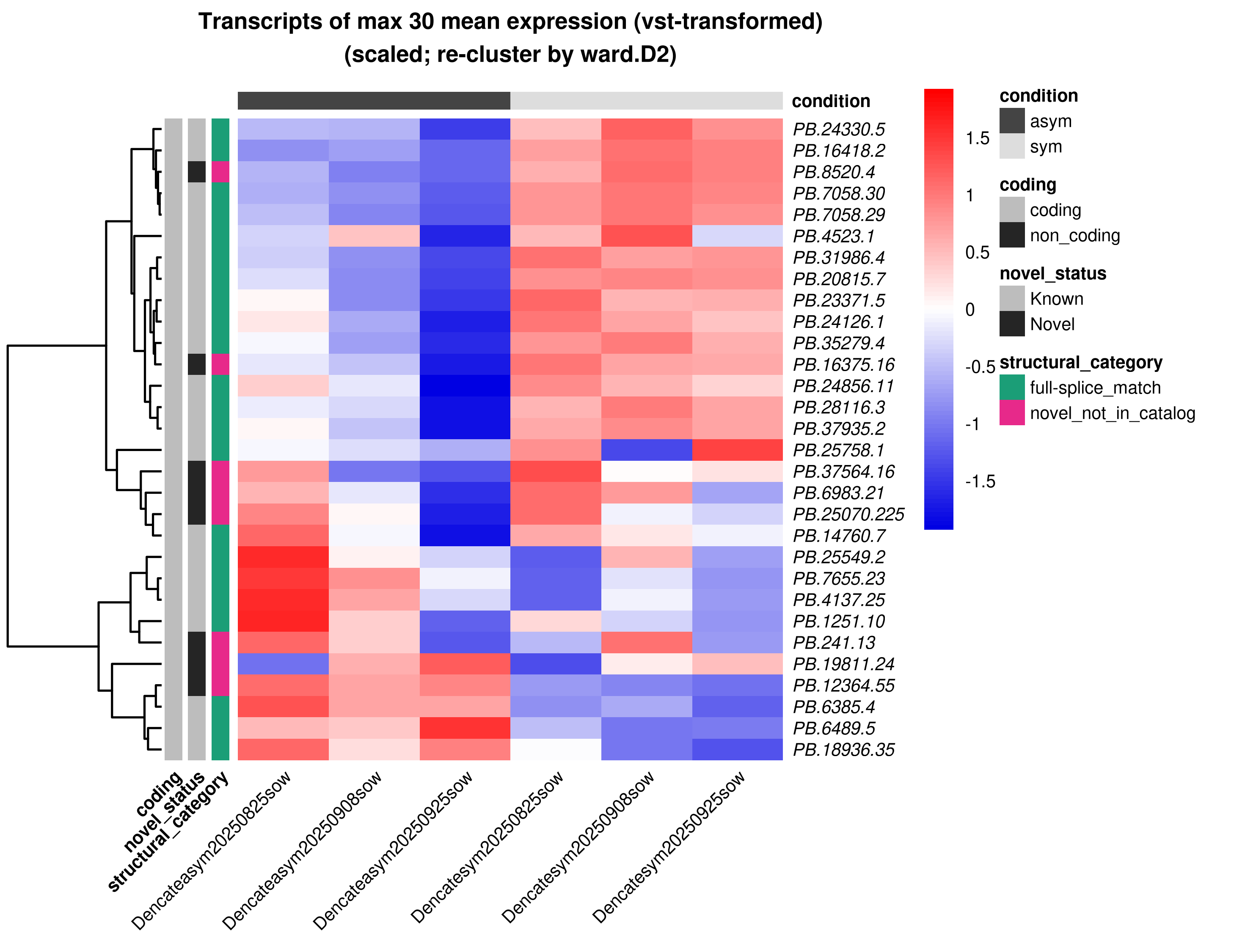
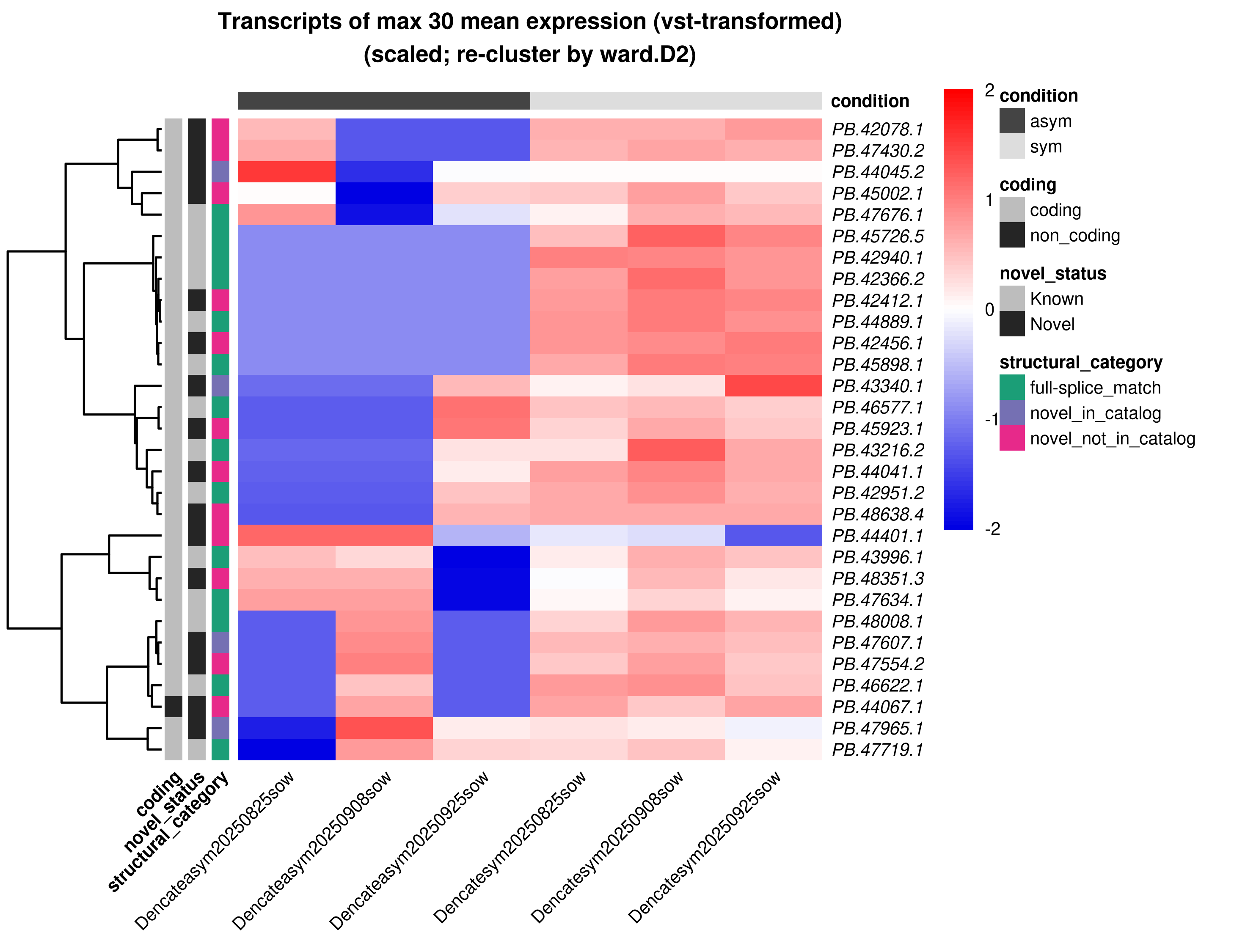
Heatmap
Dendrobium_catenatum
Serendipita_indica
Treatment comparison: sym vs. asym in Dendrobium_catenatum only
Test whether the abundance of each transcript changes between conditions. Retain isoforms with read counts greater than 5 in at least three samples.